
When someone gets arrested in California, the words “bail” and “bond” start flying around — and they’re often used interchangeably. But they mean different things, and understanding the difference can help you make faster, smarter decisions when a loved one is in custody.
What Is Bail in California?
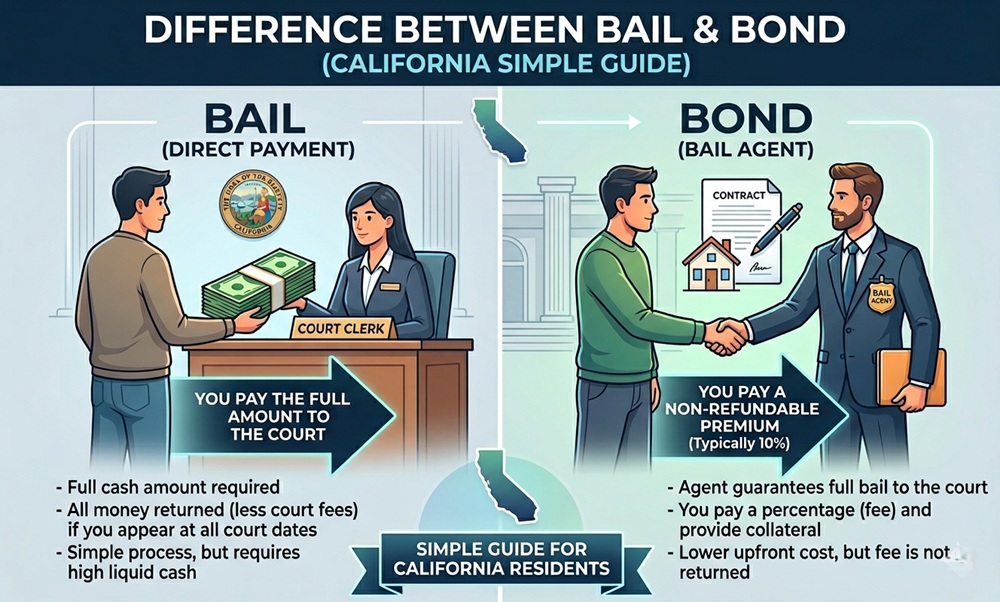
Bail is the amount of money set by a judge that a defendant must pay to be released from jail while awaiting trial. Think of it as a financial guarantee — a promise that the defendant will show up to court. If they do, the bail money is returned at the end of the case. If they don’t appear, the court keeps it.
What Is a Bond in California?
A bond — specifically a bail bond — is a third-party guarantee arranged through a bail bondsman. Instead of paying the full bail amount (which can be tens of thousands of dollars), the defendant’s family pays the bondsman a non-refundable fee, typically 10% of the total bail. The bondsman then posts the full bail with the court.
| Feature | Bail (Cash) | Bond (Bail Bond) |
| Who pays | Defendant or family directly | Bail bondsman (on behalf of defendant) |
| Amount paid | Full bail amount | 10% premium fee (non-refundable) |
| Refundable? | Yes — if defendant appears | No — the 10% fee is kept by bondsman |
| Who takes risk? | Defendant/family | Bail bondsman |
| Collateral needed? | No | Sometimes (property, valuables) |
When Would You Use Cash Bail vs. a Bail Bond?
- Cash bail: Use when bail is relatively low and you can afford the full amount — you’ll get it back after the case
- Bail bond: Use when the bail amount is too high to pay out of pocket — pay 10% and the bondsman covers the rest
How Bail Is Set in California
At the arraignment (first court appearance), the judge sets bail based on several factors:
- Severity of the charges
- Prior criminal history
- Flight risk — likelihood of fleeing
- Community ties — family, employment, long-term residence
- Whether the defendant poses a risk to public safety
California counties also have bail schedules — preset amounts for common offenses — that judges use as starting points. Your attorney can request a bail reduction hearing if the amount is unreasonable.
What If Someone Can’t Afford Bail or a Bond?
The defendant stays in jail until trial, unless the judge grants own recognizance (OR) release — where you’re released on your promise to appear, with no money required. OR release is more common for low-level offenses and defendants with strong community ties.
Common Mistakes to Avoid
- Paying a bondsman before checking if OR release is possible — it’s free
- Skipping court after posting bail — you forfeit the full amount and face re-arrest
- Failing to understand that the bondsman’s 10% fee is non-refundable, no matter what
- Ignoring conditions of release set by the judge — violations mean going back to jail
FAQs
What happens to bail money at the end of a case in California?
If the defendant appears at all required hearings, cash bail is returned after the case concludes — regardless of whether they’re convicted or acquitted. The bondsman’s fee is never returned.
Can bail be reduced in California?
Yes. An attorney can file a bail reduction motion, arguing factors like the defendant’s ties to the community, employment, and lack of criminal history. The judge has discretion to lower the amount.
What is an OR release in California?
Own recognizance (OR) release allows a defendant to be freed without posting any money, based on their promise to appear in court. It’s granted at the judge’s discretion.
Understanding the bail vs. bond distinction helps you act quickly when someone you care about is in custody. Weigh the costs, understand the risks, and consider getting legal advice before signing anything with a bondsman.
Internal links: What Happens at a Bail Hearing in California | How to Get a Bail Reduction in California | California Arraignment Process Explained
External references: California Penal Code §1275 | California Courts — Bail Information